Shoulder Hair Removal for Men: The Complete Laser Guide

Shoulder hair removal for men uses medical grade laser technology, often ND:YAG for darker or tanned skin, to target hair follicles across a course of sessions and produce long term hair reduction on the shoulder area. It will not work on white, grey, red or very light blonde hair. Results and comfort vary between individuals, and suitability is confirmed at consultation, not guessed at over the phone.
Key takeaways
- Shoulder hair is usually coarse and terminal, so most men need 6 to 10 laser sessions, spaced 4 to 6 weeks apart, compared with the 3 to 6 sessions the NHS quotes for general laser hair reduction.
- Laser only destroys hair in its active anagen (growing) phase, which at any one time covers roughly a third of the follicles on your shoulders. That single fact is the entire reason multiple sessions are unavoidable.
- Laser hair removal does not work on white, grey, red or very light blonde hair because there is no pigment for the laser to target. Electrolysis is the only genuine route for those hair colours.
- A full shoulder laser course typically costs somewhere in the region of £480 to £900 across 6 to 10 sessions (estimate, based on 2026 UK market pricing for comparable upper body areas), against an estimated £1,800 to £2,700 for five years of regular professional shoulder waxing.
- For darker or tanned skin, a longer wavelength Nd:YAG laser at 1064nm is generally considered the safer choice because it penetrates past more of the epidermal melanin and targets deeper into the follicle.
What Does Shoulder Laser Hair Removal Actually Involve, Step by Step?
Shoulder laser hair removal is not a walk-in, zap-and-go treatment, and any clinic that treats it that way is skipping steps that matter. At Alpha Laser Clinic the process for shoulder hair removal follows the same structured path every client goes through, because skipping steps is where things go wrong.
Step 1: Consultation for shoulder hair removal
Before any laser touches your skin, a qualified practitioner assesses your shoulder hair colour, coarseness and growth pattern, your Fitzpatrick skin type, your medical history and any medication you’re taking. This is where suitability gets decided honestly, not assumed. If your shoulder hair is very light, grey or red, this is also where you’ll be told plainly that laser is not the right tool, rather than being sold a course that was never going to work.
Step 2: Patch testing before shoulder laser treatment
A small test patch on the shoulder is standard practice before a full course begins. It shows how your specific skin responds to the laser settings before committing to the whole area, and it’s a step the NHS’s own laser hair reduction guidance builds in for exactly this reason.
Step 3: Shaving before your shoulder laser hair removal session
You’ll be asked to shave the shoulder area (not wax or pluck) shortly before each appointment. Laser needs a shaved follicle to work through, but the hair root under the skin still needs to be intact, so waxing or plucking between sessions actually removes the very target the laser is trying to hit.
Step 4: The shoulder laser hair removal session itself
The practitioner passes the laser handpiece across the shoulders in sections, working around the shoulder blade, the top of the shoulder and down towards the upper arm as needed. A full shoulder treatment typically takes 15 to 30 minutes, depending on how much of the surrounding area (neck, upper back, upper arms) is included in the same session.
Step 5: Aftercare guidance after shoulder hair removal
You leave with specific instructions covering sun exposure, gym kit, showering and skincare, all of which matter more for shoulders than most areas because of straps, bags and gym equipment rubbing against treated skin.
Step 6: Reviewing progress across your shoulder hair removal course
Progress is checked every few sessions. Shoulder hair, being coarse and often stubborn, doesn’t respond uniformly, and a practitioner adjusting the plan as you go is part of what a proper course looks like, rather than a fixed number of sessions sold up front regardless of how your skin responds.
How Does Shoulder Laser Hair Removal Work Biologically?
This is the part almost no clinic website actually explains, and it’s the honest answer to the question every single client asks eventually: why do I need so many sessions?
Every hair on your shoulders is cycling independently through three phases. Anagen is the active growing phase, when the follicle is producing hair and is rich in the melanin the laser needs to target. Catagen is a short transitional phase where growth stops. Telogen is the resting phase, where the follicle is dormant and largely invisible to a laser because there’s no active pigment to lock onto.
Laser hair removal only damages follicles that are in anagen at the moment of treatment. On the shoulders and upper back, roughly 20 to 30% of hairs are typically in anagen at any given time, a proportion that varies by individual and by body area. That means a single session can only ever address a fraction of the total hair on your shoulders. The rest of the hairs are in catagen or telogen, largely unaffected, and will only become treatable once they cycle back into anagen weeks later.
That’s the entire reason sessions are spaced 4 to 6 weeks apart. It isn’t an arbitrary clinic policy, it’s timed to catch the next wave of follicles as they enter their active growing phase. Skip that timing, either by leaving it too long or coming back too soon, and you’re either missing follicles that have already cycled past anagen or wasting a session on follicles that haven’t reached it yet. Leeds Teaching Hospitals NHS Trust’s laser hair reduction guidance confirms that treatment “targets hairs in the active growing phase,” which is exactly why multiple sessions are necessary, and North Bristol NHS Trust’s hair removal guidance states that most people need an initial course of several sessions with “top-up treatments once or twice a year” afterwards for maintenance.
Coarse terminal hair, which is what most men have on their shoulders, tends to sit in longer anagen cycles than fine vellus hair, which is part of why shoulder courses often run to the higher end of the session range, typically 6 to 10 sessions rather than the 3 to 6 sometimes quoted for finer, less pigmented hair.
Shoulder Hair Removal Suitability: Skin Tone, Hair Colour and Laser Type Matrix
This is the table that determines whether shoulder laser hair removal will actually work for you, and it’s the one honest answer almost no clinic publishes properly. Suitability always depends on an in-person consultation, patch test and practitioner assessment, but this gives you a realistic starting picture.
Fitzpatrick skin type | Typical shoulder hair colour/coarseness | Recommended laser | Realistic session count for shoulders | Key precautions |
I to II (very fair to fair) | Dark, coarse terminal hair | Alexandrite or Nd:YAG | 6 to 8 sessions | Good contrast between skin and hair generally gives strong results; sun exposure between sessions still needs managing |
III (fair to light olive) | Dark, coarse terminal hair | Alexandrite or Nd:YAG | 6 to 8 sessions | Patch test still essential; avoid active tan before sessions |
IV (olive/light brown) | Dark, coarse terminal hair | Nd:YAG preferred | 7 to 9 sessions | Nd:YAG’s longer wavelength reduces risk of pigment change versus shorter wavelength lasers |
V (brown/dark brown) | Dark, coarse terminal hair | Nd:YAG | 8 to 10 sessions | Nd:YAG is the safer option here; other wavelengths carry higher burn and pigmentation risk |
VI (deeply pigmented) | Dark, coarse terminal hair | Nd:YAG | 8 to 10 sessions | Nd:YAG strongly preferred; extended course and conservative settings, confirmed at consultation |
Any skin type | Very light blonde, red, grey or white hair | Not laser | Not applicable | Insufficient melanin for the laser to target; electrolysis is the genuine alternative |
The pattern that matters most here isn’t the skin tone column, it’s the hair colour row at the bottom. Laser hair removal, of any wavelength, does not reliably work on white, grey, red or very light blonde shoulder hair. The laser needs melanin (pigment) in the hair shaft to absorb the light and generate heat at the follicle. Without that pigment, there’s nothing for the laser to lock onto, regardless of how dark or light your skin is. If this describes your shoulder hair, a clinic that sells you a course anyway isn’t being straight with you. Electrolysis, which treats each follicle individually with a fine probe rather than relying on pigment, is the only hair removal method that works reliably on these hair colours, and it’s worth knowing that upfront rather than discovering it three sessions in.

National Award Winner
Secured top 3 positions across 4 major categories at the Beauty & Aesthetics Awards 2025

Category of
Category of
best for laser award
Category of
best social media
Category of
entrepreneur of the year
Category of
best aesthetics practitioner
Category of
most wanted aesthetic clinic

Category of
RISING STAR
AWARd

Category of
best for laseR Award
Category of
Best Social
Media Award
Category of
Entrepreneur of the year
Category of
Best Aesthetics practitioner

Category of
Most Wanted Aesthetic Clinic
National Award Winner
Secured top 3 positions across 4 major categories at the Beauty & Aesthetics Awards 2025
Category of
RISING STAR
AWARd
Category of
best for laseR Award
Category of
Best Social
Media Award
Category of
Entrepreneur of the year
Category of
Best
Aesthetics practitioner
Category of
Most Wanted Aesthetic Clinic
Why darker skin needs a different approach to shoulder laser hair removal
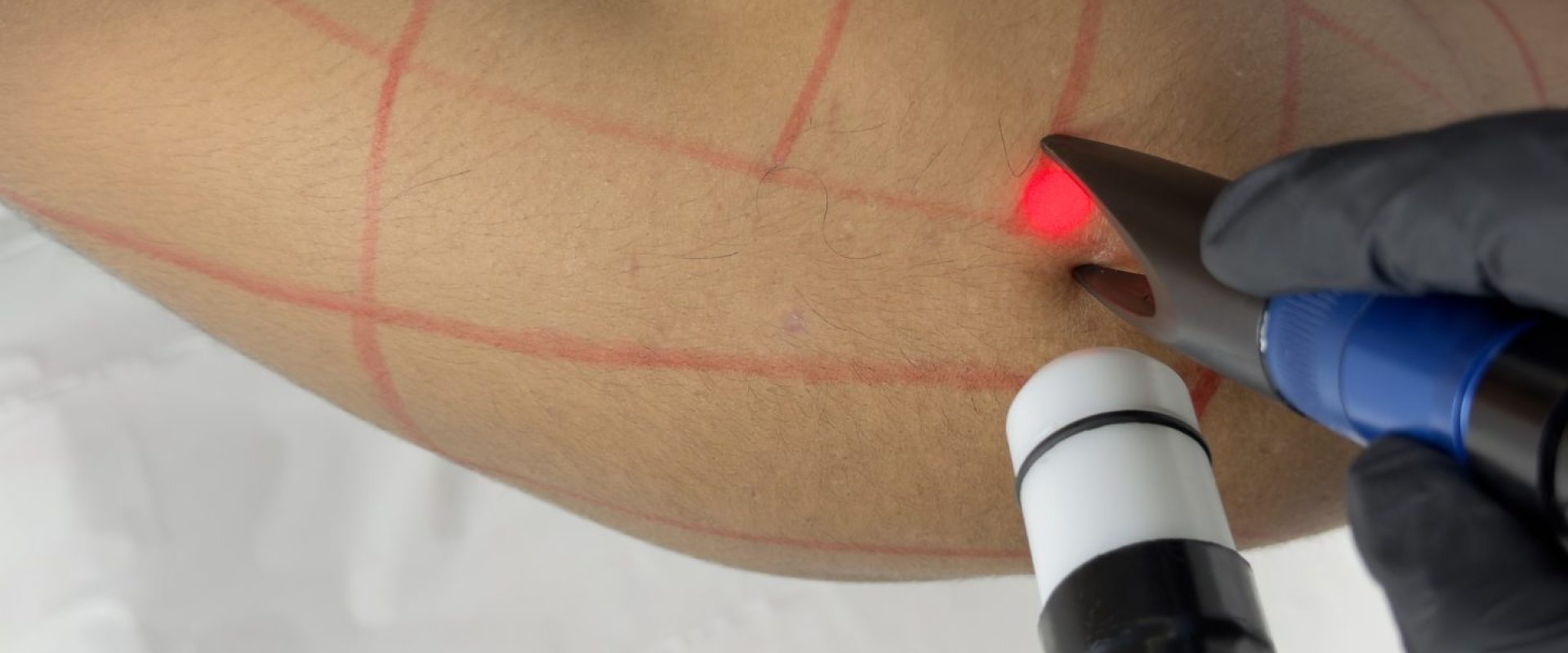
For darker skin tones, the laser has to tell the difference between the pigment in the hair follicle and the pigment in the surrounding skin. Shorter wavelength lasers can struggle with that distinction on darker skin, raising the risk of burns or patches of pigment change. A longer wavelength Nd:YAG laser, operating around 1064nm, penetrates past more of the epidermal melanin and reaches deeper into the follicle, which is why it’s generally considered the safer and more appropriate choice for Fitzpatrick IV to VI skin tones having shoulder hair removal, a distinction DermNet’s clinical guidance on Nd:YAG laser treatment also draws. This is a genuine clinical distinction, not marketing language, and it’s why the equipment a clinic uses matters as much as the practitioner performing the treatment. Read more on the Nd:YAG advantage for darker skin.
Who Does Shoulder Hair Removal Suit?
Shoulder hair removal tends to suit specific, recognisable situations rather than being a universal grooming upgrade. In clinic, the men who get the most value from it tend to fall into a few clear groups.
Shoulder hair removal for gym users and swimmers
Men who train regularly or swim often find shoulder hair catches on straps, kit and pool water in ways that get old fast. Reducing shoulder hair means less time spent trimming an area you genuinely cannot see properly in a mirror, and clients often tell us they feel more comfortable pulling off a t-shirt at the gym once shoulder and upper back hair is under control, without the shaving bumps and ingrown hairs that come with regular shaving.
Shoulder hair removal for men who wear vests, sleeveless tops or go shirtless
If your work, sport or social life regularly puts your shoulders on display, whether that’s a vest at the gym, a sleeveless top on holiday, or simply going shirtless at the beach, shoulder hair removal addresses an area that’s otherwise a constant, visible grooming task.
Shoulder hair removal for men with thick or coarse shoulder hair
Coarse, dark terminal hair on the shoulders is exactly the hair type laser treats most effectively. If your shoulder hair grows back quickly and densely after shaving or waxing, you’re a genuinely good candidate for the biology of the treatment, not just the convenience of it.
Shoulder hair removal for men who struggle to reach or trim the area themselves
Shoulders are one of the hardest areas on the body to groom yourself. You can’t see the top of your own shoulder blade properly, and reaching around to shave or trim it evenly, without missing patches or nicking the skin, is genuinely difficult without help. That’s a practical, physical reason clients choose to have it done professionally rather than a purely cosmetic one.
Shoulder hair removal for busy professionals
For men who don’t want a recurring grooming task added to an already full week, a finite course of sessions that reduces the need for ongoing shaving or trimming is the appeal. It trades a defined block of appointments now for less routine maintenance later.
Who Shoulder Hair Removal Isn’t For, and Who Should Speak to the Clinic First
Being honest about who this treatment doesn’t suit is just as important as explaining who it does, and it’s the section most clinic websites skip entirely.
Very light, grey, white or red shoulder hair
As covered in the matrix above, laser cannot target hair with insufficient pigment. If this is your shoulder hair colour, we’ll tell you that at consultation rather than start a course that was never going to deliver results. Electrolysis is the honest alternative here.
Certain medical conditions and shoulder laser hair removal
Some skin conditions, active infections in the treatment area, and a history of keloid scarring need to be discussed with a practitioner before any shoulder treatment goes ahead. This isn’t a box-ticking exercise, it genuinely changes whether treatment is appropriate.
Photosensitising medication and shoulder hair removal
Certain medications, including some acne treatments (such as isotretinoin/Roaccutane), some antibiotics and other photosensitising drugs, increase the skin’s sensitivity to light-based treatments. A full medication check at consultation is not optional, it’s how we protect your skin.
Active tan or recent sun exposure on the shoulders
A tan, whether from the sun or a sunbed, increases the amount of melanin in the skin itself, which raises the risk of the laser targeting skin pigment instead of just the hair follicle. Treatment is generally delayed until a tan has faded, and this applies specifically to the shoulders given how exposed they are on holiday or in the garden.
Unrealistic expectations about shoulder hair removal results
If you’re expecting every single hair gone forever after one or two sessions, this isn’t the treatment for that expectation. Laser delivers long term hair reduction, with results that vary between individuals, not a guaranteed, permanent, total clearance. Clients who go in expecting a course of appointments and a gradual, honest reduction tend to be the ones who are satisfied with the outcome.
Does Shoulder Laser Hair Removal Hurt? Sensation and Pain, Honestly
Pain is one of the most searched questions about this treatment and one of the most dishonestly answered. Nobody can promise you shoulder laser hair removal is painless, and any clinic that says so is not being straight with you.
What’s genuinely true is that the shoulders are a comparatively broad, flat, well-muscled area, which most clients find more tolerable than bony areas like the collarbone edge, the spine, or areas with thin skin directly over bone. Most people describe the sensation as a warm snap, similar to an elastic band flicked against the skin, with brief stinging during each pulse. Some describe more heat and sensitivity over the top of the shoulder near the bone itself compared with the flatter muscle of the upper back and rear shoulder.
Sensation genuinely varies between individuals, and is affected by hair coarseness (coarser hair tends to feel more, because there’s more to target), skin sensitivity, and where exactly on the shoulder the laser is working. Cooling built into modern medical grade laser systems reduces discomfort during treatment, but it doesn’t eliminate sensation entirely, and it shouldn’t be marketed as if it does.
How Much Does Shoulder Hair Removal Cost vs Years of Shaving? The Real Arithmetic
Nobody in this market actually does this maths, so here it is, clearly labelled as an estimate based on published 2026 UK market pricing for comparable upper body treatment areas rather than a guaranteed quote.
Approach | Estimated cost | Basis |
Full shoulder laser course (6 to 10 sessions) | Roughly £480 to £900 total | Based on typical UK per-session pricing of £60 to £100 for a shoulder-sized upper body area, across a realistic course length |
Professional shoulder waxing, ongoing | Roughly £360 to £540 per year | Estimated at £30 to £45 per session, repeated monthly to keep pace with regrowth |
Professional shoulder waxing over 5 years | Roughly £1,800 to £2,700 | Five years of ongoing monthly waxing at the above rate, with no reduction in hair over time |
Home shaving, ongoing | Roughly £100 to £200 per year | Razors, blades and shaving products, plus the time cost of an area that’s awkward to reach and shave evenly yourself |
Home shaving over 5 years | Roughly £500 to £1,000 in products alone | Excludes the time spent, and the recurring irritation and ingrown hairs coarse shoulder hair is prone to |
The pattern is straightforward: a finite laser course is a front-loaded cost that, for men with coarse, dark shoulder hair, tends to work out cheaper than years of ongoing professional waxing, and comparable to or cheaper than years of home shaving once irritation, ingrown hairs and the sheer awkwardness of reaching your own shoulders are factored in. It is not cheaper than shaving for a man who only shaves his shoulders once or twice a year, and it will not be worth the outlay for someone with very light or fine shoulder hair where laser was never going to be the effective option in the first place.
Laser Hair Removal Services For Men In Bradford
Alpha Laser Clinic is Yorkshire’s first men’s only clinic specialising in men’s laser hair removal in Bradford and other cosmetic treatments for all skin tones.
Common Mistakes That Ruin Shoulder Laser Hair Removal Results
These are the genuine, repeatable ways men undermine their own shoulder hair removal course, usually without realising it.
Shaving too close, or not shaving at all, before a shoulder session. Turning up with unshaved shoulder hair means the laser burns through hair above the skin rather than reaching the follicle efficiently, and can cause unnecessary surface heat and discomfort. Shaving too aggressively, causing nicks or irritation, right before a session isn’t much better.
Tanning before a shoulder laser appointment. Sun exposure, sunbeds and self-tan all increase the risk of the laser interacting with skin pigment instead of just hair pigment, and can mean a session has to be postponed altogether.
Not completing the full shoulder hair removal course. Stopping after 2 or 3 sessions because visible hair has reduced noticeably is the single most common reason results don’t hold. Remember the biology: each session only catches follicles that were in anagen at that moment. Stopping early leaves a meaningful proportion of shoulder follicles untreated.
Treating shoulders and chest, or shoulders and back, inconsistently. Men who treat their shoulders on schedule but skip or delay sessions on adjoining areas like the upper back or chest often end up with a visibly uneven result at the boundary lines between treated and untreated skin.
Skipping the patch test. It exists to catch how your specific skin responds before a full session, and skipping it removes a genuine safety check, not just a formality.
Waxing or plucking shoulder hair between laser sessions. This removes the hair root the laser needs to target, effectively undoing the treatment plan between appointments. Shaving is fine between sessions; waxing and plucking are not.
Shoulder Hair Removal: Laser vs Shaving vs Waxing vs Electrolysis
An honest comparison has to include where laser is not the best answer, and that includes hair colours it simply can’t treat.
Method | Best for shoulder hair | Where it loses |
Laser (medical grade, Nd:YAG for darker skin) | Dark, coarse terminal hair; men wanting long term hair reduction with a finite course | Does not work on white, grey, red or very light blonde hair; requires multiple sessions over months, not an instant fix |
Shaving | Cheap, immediate, no downtime | Regrowth within 1 to 3 days on coarse shoulder hair; hard to reach evenly yourself; prone to nicks, irritation and ingrown hairs on this area |
Waxing | Slower regrowth than shaving, works on some lighter hair shaving can’t manage | Ongoing cost for life with no reduction over time; can be genuinely painful over a broad area like the shoulders; ingrown hair risk remains |
Electrolysis | The only method that reliably treats white, grey, red or very light blonde shoulder hair; genuinely permanent, follicle by follicle | Slow, treating one follicle at a time makes a full shoulder area a lengthy, multi-session undertaking; typically more time-intensive than laser for larger areas of dark hair |
If your shoulder hair is dark and coarse, laser is generally the most efficient route to a lasting reduction. If it’s white, grey, red or very light blonde, laser is the wrong tool regardless of how good the clinic’s equipment is, and electrolysis is the honest recommendation, even though we don’t offer it ourselves.
Shoulder Hair Removal Aftercare: Protecting Your Skin After Treatment
Aftercare for the shoulders matters more than for some other areas simply because of what regularly touches them: bag straps, gym vest straps, seatbelts and rucksacks.
Avoid straps and rubbing straight after treatment. Bag straps, gym kit straps and tight seatbelt positioning can irritate freshly treated shoulder skin. Loose, breathable clothing for the first day or two reduces friction on the treated area.
Skip hot showers and exfoliating immediately afterwards. Treated skin is sensitised straight after a session. Lukewarm water and no exfoliating products for at least 24 to 48 hours gives the skin time to settle.
Sun protection matters for months, not days. Following Leeds Teaching Hospitals NHS Trust’s laser hair reduction guidance, high-factor sunblock on treated skin is genuinely important for an extended period after a course, not just the days immediately following each session, because treated skin can be more prone to pigment change if it’s exposed to strong sun while still recovering. The British Medical Laser Association’s treatment guidelines set out similar sun-avoidance and aftercare standards for practitioners across the UK.
Think about gym kit and training schedules. If you train regularly, plan sessions around rest days where possible, since sweat and friction from gym kit straight after treatment can aggravate freshly treated skin.
Don’t wax or pluck between sessions, but shaving is fine. As covered above, this preserves the follicle target for your next session while keeping the area manageable in between. Our full post-laser aftercare and skin recovery guide covers general aftercare in more depth.
Is Shoulder Hair Removal Worth It? Our Verdict
For a man with dark, coarse shoulder hair who’s tired of an area he can’t reach or trim properly himself, shoulder laser hair removal is genuinely one of the better applications of this technology: a well-defined body area, hair that responds well to laser, and a finite course that compares favourably against years of professional waxing. It is not a painless, one-session miracle, and it is not the right choice if your shoulder hair is white, grey, red or very light blonde, in which case we’d rather tell you that honestly at consultation than sell you a course that won’t deliver. Suitability always comes down to your specific skin, hair and medical history, checked properly before treatment starts, not assumed from a website. Ready to find out if you’re suitable? Book a consultation with our Bradford or Oldham team.
More Alpha Laser Clinic Guides on Shoulder and Upper Body Hair Removal
- Men’s laser hair removal treatment, the full overview of our upper body laser service
- Laser hair removal for different skin types and hair textures
- The complete 6-month laser hair removal timeline
- Advanced facials for men, if you’re looking to pair treatments
- Our Bradford clinic and our Oldham clinic
Shoulder Hair Removal FAQs
Q1 Can shoulder hair removal be combined with back and chest treatment?
Yes, and for many men it makes sense to treat the shoulders alongside the back and chest in the same course, since hair often grows continuously across these areas. Treating them together tends to give a more even result at the boundaries than treating one area on schedule and leaving another inconsistent.
Q2 How many sessions do men need for coarse shoulder hair?
Most men with coarse, dark shoulder hair need somewhere between 6 and 10 sessions, spaced 4 to 6 weeks apart, though this is confirmed individually at consultation and adjusted as your practitioner reviews progress through the course.
Q3 Does shoulder laser hair removal hurt?
It isn’t painless, but most clients find the broad, flat muscle of the shoulder more tolerable than bony areas like the collarbone edge. Expect a warm snapping sensation during each pulse. Sensation varies between individuals.
Q4 Does laser work on shoulders with dark or tanned skin?
It can, but the laser type matters. A longer wavelength Nd:YAG laser is generally the safer option for darker skin tones, and an active tan usually means treatment needs to be delayed until it fades, regardless of your underlying skin tone.
Q5 Can athletes have shoulder hair removal during a training season?
It’s possible, but sessions are usually timed around training and competition schedules rather than fitted in regardless. Sweat and friction from training kit straight after a session can irritate treated skin, so your practitioner will help plan sessions around rest days where possible.
Q6 What if my shoulder hair is grey, white, red or very light blonde?
Laser will not work reliably on these hair colours because there isn’t enough pigment for the laser to target. This applies regardless of skin tone or which laser is used. Electrolysis is the genuine alternative, and we’ll say so at consultation rather than start a course that wasn’t going to work.
Q7 Will shoulder hair removal results be permanent?
No treatment can honestly promise permanent hair removal. Laser delivers long term hair reduction, and results vary between individuals. Most people see a substantial, lasting reduction after completing a full course, with occasional top-up sessions sometimes needed later.
Q8 Do I need to shave my shoulders before each session?
Yes. Shaving (not waxing or plucking) shortly before your appointment is standard, because the laser needs a shaved surface but an intact follicle root beneath the skin to target effectively.