Can You Have Laser Hair Removal Over Moles or Freckles?
Laser hair removal over moles and freckles is usually possible. But it is never a blanket yes. Freckles are flat. They hold very little pigment, so they rarely change how a session goes. Moles are different. A mole holds a dense patch of colour, called melanin, and a laser can react to that patch in ways that are hard to guess from across the room. At Alpha Laser Clinic, every mole and every patch of freckled skin gets a proper look during your consultation and patch test. Nothing is assumed safe, or unsafe, before anyone has actually seen your skin.
Can You Laser Over a Mole?
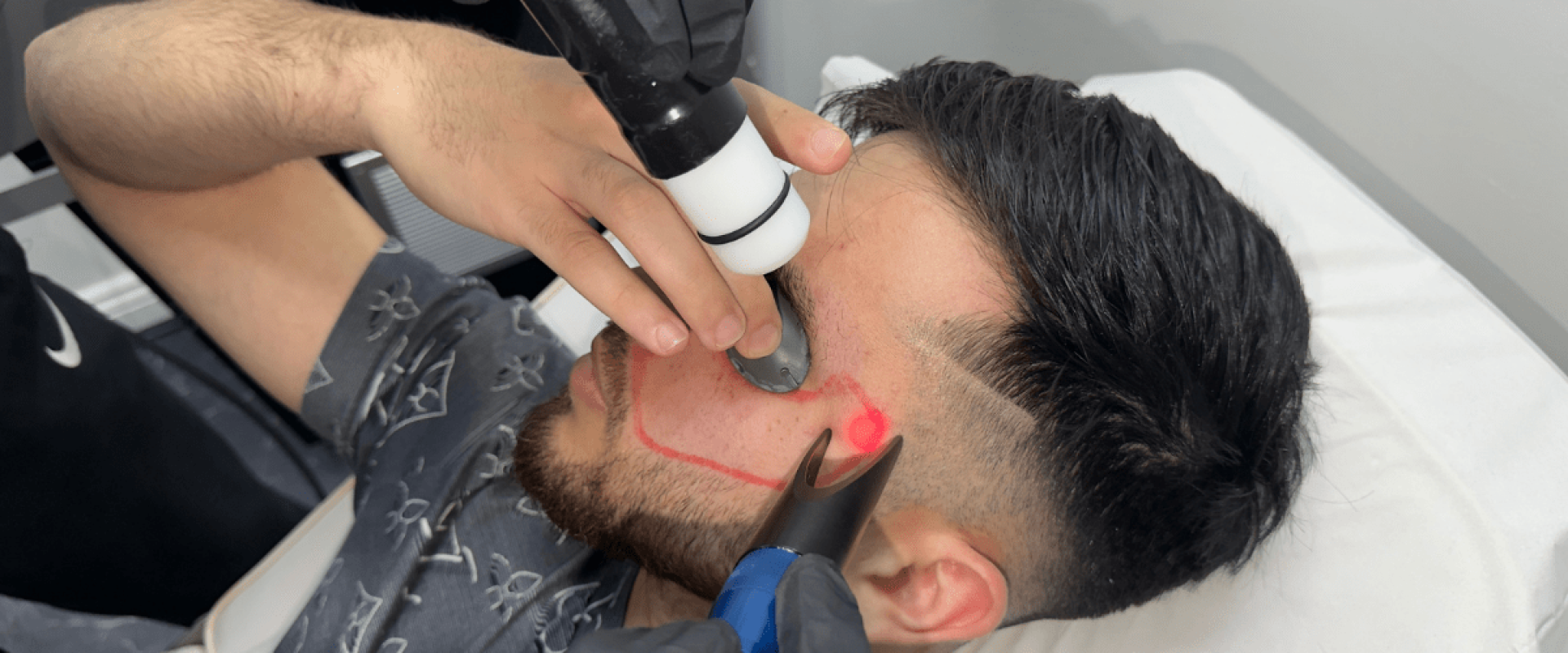
Sometimes. It depends on the mole in front of your practitioner, not on a general rule for moles as a group. A flat mole that has not changed in years is usually treated with more confidence than a raised, dark or newly appeared one. Many practitioners simply work around a mole rather than through it. This is common on the beard-line, neck or shoulders, where the rest of the treatment is otherwise straightforward. The call is made at your consultation. Your practitioner looks at the mole directly, asks about its history, and checks it against your wider skin and hair type.
Your practitioner weighs up a few things before deciding how to treat around a mole:
- Whether the mole is flat or raised above the skin.
- How dark it is compared with the skin around it.
- Whether it has changed recently in size, shape or colour.
- Where it sits on the treatment area, and whether the laser can be guided around it.
- Your wider skin type and hair type, checked at the same visit.
Most of the time the answer is simple. The skin around the mole gets treated as normal. The mole itself gets avoided, protected or treated with lower settings, depending on what your practitioner sees on the day.
National Award Winner
Secured top 3 positions across 4 major categories at the Beauty & Aesthetics Awards 2025
Category of
Category of
best for laser award
Category of
best social media
Category of
entrepreneur of the year
Category of
best aesthetics practitioner
Category of
most wanted aesthetic clinic
Category of
RISING STAR
AWARd
Category of
best for laseR Award
Category of
Best Social
Media Award
Category of
Entrepreneur of the year
Category of
Best Aesthetics practitioner
Category of
Most Wanted Aesthetic Clinic
National Award Winner
Secured top 3 positions across 4 major categories at the Beauty & Aesthetics Awards 2025
Category of
RISING STAR
AWARd
Category of
best for laseR Award
Category of
Best Social
Media Award
Category of
Entrepreneur of the year
Category of
Best
Aesthetics practitioner
Category of
Most Wanted Aesthetic Clinic
Is Laser Hair Removal Safe on Freckles?
Yes, in almost every case. Freckles are flat and small. They sit in the top layer of skin, so they do not carry the thick pigment that a raised mole does. Treating freckled skin is normal, especially for men with fair or sun-exposed skin. Freckles rarely change your practitioner’s plan.
Freckles are usually easy to treat around for a few reasons:
- They sit flat in the skin, not raised above it.
- They carry far less pigment than a mole does.
- They often show up more in summer, which does not change how your skin is assessed.
What matters more is how your whole skin reacts. That is what the patch test checks. Each freckle is not treated as its own separate decision.
Why Pigment Changes the Laser Hair Removal Risk
A laser hair removal device works by targeting melanin. Melanin is the pigment that gives hair and skin their colour. That is why laser works so well on hair. It is also why a mole needs more care than the skin around it. A mole holds far more melanin than ordinary skin. So it soaks up more laser energy in the same pulse. On skin without a mole, that energy spreads out and the hair follicle takes the heat. On a mole, the pigment can take an uneven share of that heat. This is one of the main reasons a practitioner will either avoid a mole or change the plan around it.
The type of laser matters here too. We use medical-grade laser technology, specifically medical-grade Nd:YAG laser technology. Nd:YAG uses a longer wavelength than older IPL devices. In practice, that usually gives a steadier, more controlled reaction with pigment in the skin. It does not remove the need for care around a mole. A qualified practitioner, using the right machine, still has to make a careful call. That call is made on your skin, not a rule applied to every man who walks in with a mole on his beard-line or shoulders.
Moles That Need a GP Check Before Laser Hair Removal
If a mole has changed recently, see a GP before any cosmetic treatment goes near it. Laser or not, that advice stays the same. It is general skin health advice. It applies whether you are booking a session or not, and it comes before any decision about how that skin looks.
The NHS guide to moles lists the kind of changes worth getting checked, including a mole that:
- Has grown larger or changed shape.
- Has changed colour, or has more than one colour in it.
- Has an uneven or blurred edge.
- Is itchy, painful or bleeding.
- Has appeared new on skin as an adult, when you have not had moles like it before.
Our practitioners cannot diagnose a mole. That is not their job. A GP or skin specialist does that. What a practitioner can do is flag anything unusual at your consultation. Then they point you towards getting it checked. That happens before treatment goes ahead near it. Your skin health comes first. The treatment plan comes second.
Laser Hair Removal Over Moles and Freckles: What Happens at Consultation
Every laser hair removal treatment we carry out starts with a consultation and a patch test. That groundwork matters even more when moles or clear freckling are part of the picture. Nothing is treated on a first visit. Your practitioner looks at your skin, asks about your medical history and any medication, and talks through any areas you are unsure about. Moles included.
In practice, that visit covers:
- A look at your skin type, hair type and the treatment area as a whole.
- A direct check of any moles, scars or marked skin within that area.
- Questions about medication, recent sun exposure and any skin conditions.
- A patch test on a small section of skin, to see how it reacts before a full session goes ahead.
- A plan for the areas that will be treated, and any that will be avoided or treated with extra care.
One of our Trustpilot reviews puts it simply: “Excellent service and excellent results. Very knowledgeable and help put you at ease before proceeding with any treatments.” That is the whole point of the consultation stage. It is not a box to tick on the way to treatment.
The assessment looks at more than just one mole. Read more about the do’s and don’ts of laser hair removal and how skin type and hair texture assessment shapes the plan your practitioner builds for you.
Laser Hair Removal Services For Men In Bradford
Alpha Laser Clinic is Yorkshire’s first men’s only clinic specialising in men’s laser hair removal in Bradford and other cosmetic treatments for all skin tones.
Mole Monitoring After Laser Treatment: Protecting Your Skin, Not Just Your Results
Laser hair removal is not a reason to stop checking your own skin. Mole monitoring after laser treatment matters just as much afterwards as it did before. A mole that was avoided during treatment should still get checked by you now and then, the same way anyone should keep half an eye on their own skin, with or without a treatment history.
Watch for a few things in the weeks after any session near a mole:
- Any change in the mole’s size, shape or colour.
- Redness or irritation around the mole that does not settle within a few days.
- Any new mark appearing close to where a mole already sits.
None of this is specific to laser hair removal. It is the same advice anyone should follow for their own skin. Laser or no laser. Notice a change? The next step is the same one as always: get it looked at by a GP, then tell your practitioner at your next visit so your plan can be adjusted if needed.
What to Tell Your Practitioner About Moles and Freckles Before Treatment
The most useful thing you can do before a session is simple: mention anything on your skin that concerns you, even if it seems small. Practitioners hear this question often. It takes a couple of minutes within your consultation.
Worth mentioning before your consultation or patch test:
- Any mole that has changed recently, even if you have not yet seen a GP about it.
- Any mole removal, skin surgery or scarring in the treatment area.
- Whether you tan easily, burn easily, or get noticeably more freckles in summer.
- Any skin condition, medication or recent sun exposure that could affect how your skin reacts.
Our practitioners use this, alongside what they can see on the day, to decide how to treat the area. That might mean working around a mole, treating it with extra care, or leaving it for a GP to check first.
Laser Hair Removal, Moles and Freckles: Questions Men Ask
Q: Can Laser Hair Removal Burn or Damage a Mole?
Treating directly over a mole without care raises the risk of an uneven reaction, including a burn. That is because a mole soaks up more laser energy than the skin around it. This is exactly why practitioners avoid treating directly over most moles, rather than hoping the laser will simply skip past them. The risk is managed through the consultation, the patch test and the practitioner’s own judgement on the day. Not by assuming it will never happen.
Q: Does Laser Hair Removal Change a Mole’s Colour or Shape?
A mole is not usually the target of treatment, since practitioners work around a mole rather than through one wherever possible. If a mole does seem to change after any treatment, get it checked by a GP. The same way as any other change to a mole. Not something to wait and see about.
Q: Could a Mark Need a GP’s Opinion Before Laser Treatment?
Occasionally, yes. What looks like an ordinary mole can sometimes be a mark worth a second opinion. This is exactly why practitioners are trained to flag anything unusual, rather than treat first and ask questions later. If your practitioner is ever unsure about a mark on your skin, the safe move is to pause that area and point you towards your GP. Guessing is not the answer.
Q: Is Laser Hair Removal Safe for Pigmented or Darker Skin Generally?
Generally, yes, when it is done with the right equipment and a proper check beforehand. Pigmented and darker skin changes the laser settings and the technology needed. It does not rule out treatment on its own. Read the fuller picture in our piece on laser hair removal and skin tone.
Got a mole, freckled skin, or any mark you are unsure about? The next step is simple: book a consultation and bring it up with your practitioner. Nothing is treated on that first visit without a proper look at your skin first.