




Yes, laser hair removal is safe and effective for darker skin, provided the right laser and settings are used and the treatment is carried out by a properly trained practitioner. The specific laser matters more here than almost anywhere else in this treatment: Nd:YAG, at a wavelength of 1064nm, is widely regarded by dermatologists as the safer option for darker skin tones, because its longer wavelength penetrates deeper into the skin while being absorbed less by the melanin sitting near the surface. That physics distinction is the whole reason the old, outdated advice that “laser doesn’t work on dark skin” exists, and why it’s no longer accurate when the right equipment and settings are used.
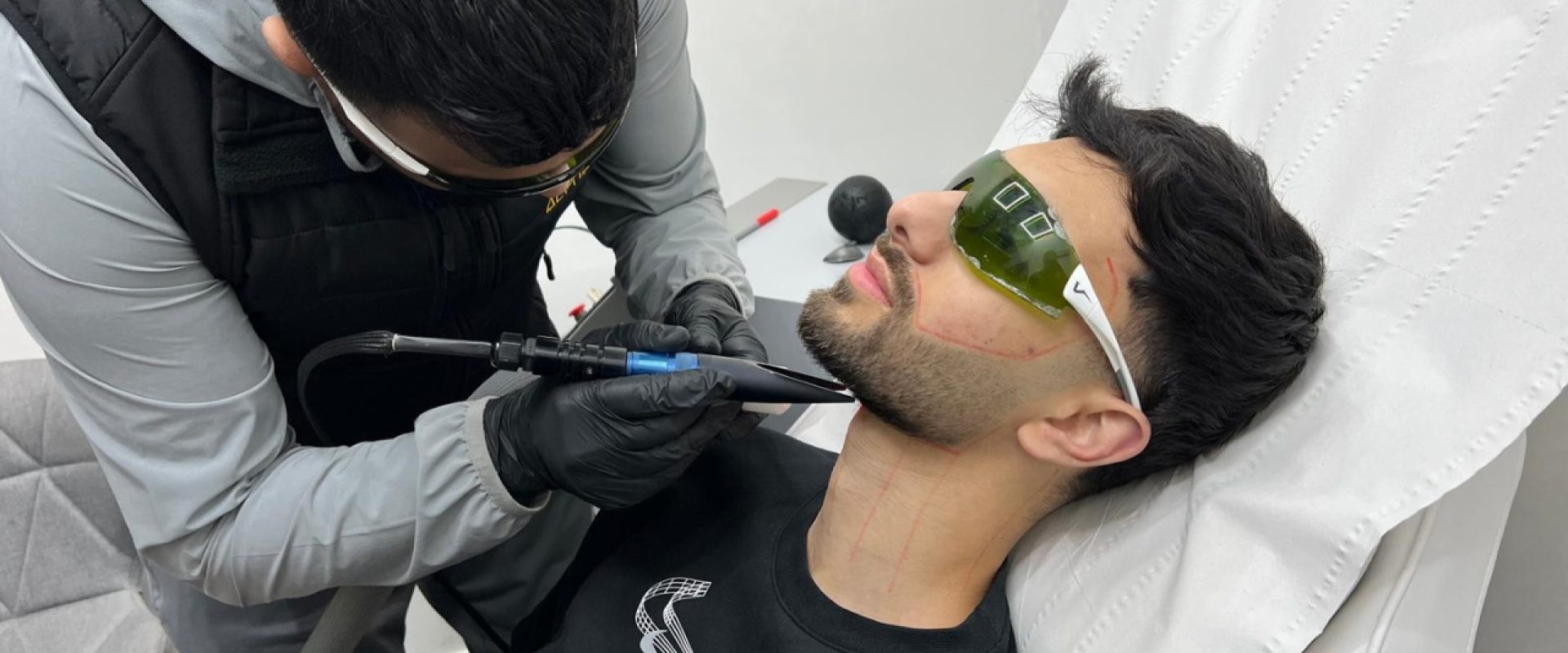
At Alpha Laser Clinic, treatment for darker skin tones is carried out using medical-grade laser technology, including ND:YAG, with suitability and settings confirmed individually at consultation and patch test rather than applying one setting to everyone.
Laser hair removal works by targeting melanin, the pigment that gives both hair and skin their colour. In lighter skin with dark hair, there’s a big contrast between the two, so the laser’s energy goes almost entirely toward the hair follicle with very little competition from the surrounding skin. That’s the “ideal” scenario a lot of older laser technology was originally built around.
Darker skin complicates this because the skin itself contains significantly more melanin, which means it competes with the hair follicle for the laser’s energy. Older laser and IPL systems, using shorter wavelengths, struggled to tell the difference between hair pigment and skin pigment, and when the surrounding skin absorbed too much of that energy, the result could be burns, blistering, or long-term pigment changes rather than a damaged hair follicle.
This is where wavelength matters. As the wavelength of laser light increases, it penetrates deeper into the skin while melanin absorption decreases. A longer wavelength, like the 1064nm used by Nd:YAG lasers, largely bypasses the melanin sitting in the upper layers of the skin and delivers more of its energy directly to the hair follicle sitting deeper down. Less energy absorbed by the skin’s surface means a lower risk of burns and pigment changes, while still delivering enough heat to the follicle itself to damage it effectively.
This isn’t a marginal technical detail. It’s the difference between a treatment that’s actually safe for darker skin and one that carries a real risk of harm, which is exactly why the choice of laser and the settings used matter as much as, if not more than, the number of sessions you book.
Dermatology uses the Fitzpatrick scale to classify skin by how it responds to UV light, from Type I (very fair, always burns) through to Type VI (deeply pigmented, rarely burns). This scale is the standard reference for choosing an appropriate laser and settings, not just for darker skin but across the board.
Fitzpatrick skin type | Typical description | Generally recommended laser | Key consideration |
I–II | Very fair to fair | Alexandrite or diode commonly effective | Lower risk of pigment-related side effects generally |
III–IV | Light-medium to olive | Diode (810nm) widely used; ND:YAG also suitable | Settings calibrated to balance efficacy and safety |
V | Brown to dark brown | ND:YAG (1064nm) generally preferred | Higher risk of side effects if the wrong wavelength or settings are used |
VI | Deeply pigmented | ND:YAG (1064nm) considered the safer standard | Longer wavelength reduces surface melanin absorption, lowering burn risk |
A 2013 clinical paper published in the Journal of Drugs in Dermatology, reporting on long-pulsed 1064nm Nd:YAG treatment specifically in Fitzpatrick skin types IV to VI, concluded that with the right treatment settings, darkly pigmented individuals can undergo laser hair removal effectively and safely. That’s not a marketing claim, it’s a peer-reviewed clinical finding, and it lines up with what dermatologists across multiple more recent sources consistently recommend: Nd:YAG as the standard choice for darker Fitzpatrick types, specifically because of how its wavelength interacts with the skin.
This is worth being straightforward about, because it’s directly relevant to anyone with darker skin considering this treatment in the UK, and it’s not something most clinics bring up unprompted.
Laser hair removal in the UK is currently one of the least regulated cosmetic procedures available. Non-surgical treatments including laser hair removal can, at present, legally be carried out by someone with no medical training and no specific mandated qualification, and oversight varies depending on which part of the UK you’re in, handled by a mix of local authorities, the Care Quality Commission, or nation-specific healthcare inspectorates, rather than one consistent national standard. The British Association of Dermatologists has specifically flagged that people with darker skin tones are more vulnerable to burns and complications when treatment is carried out incorrectly, precisely because getting the wavelength and settings right matters so much more for darker skin than lighter skin.
This is starting to change. New government licensing reforms are being introduced in England that will eventually make it a legal requirement to hold a licence and operate from a licensed premises for a range of cosmetic procedures, with laser hair removal expected to sit in the lower-risk tier of that framework. Until that’s fully in force, though, the practical reality is that the law currently doesn’t stop an untrained person from operating a medical-grade laser on your skin, which makes the choice of clinic and practitioner qualifications matter more than most people realise, and considerably more than the specific machine brand on its own. Ask about practitioner training and experience with darker skin tones specifically. A reputable clinic won’t be offended by the question, and won’t dodge it either.
Secured top 3 positions across 4 major categories at the Beauty & Aesthetics Awards 2025
Category of
Category of
best for laser award
Category of
best social media
Category of
entrepreneur of the year
Category of
best aesthetics practitioner
Category of
most wanted aesthetic clinic
Category of
RISING STAR
AWARd
Category of
best for laseR Award
Category of
Best Social
Media Award
Category of
Entrepreneur of the year
Category of
Best Aesthetics practitioner
Category of
Most Wanted Aesthetic Clinic
Secured top 3 positions across 4 major categories at the Beauty & Aesthetics Awards 2025
Category of
RISING STAR
AWARd
Category of
best for laseR Award
Category of
Best Social
Media Award
Category of
Entrepreneur of the year
Category of
Best
Aesthetics practitioner
Category of
Most Wanted Aesthetic Clinic
Session 1. Hair is treated using settings appropriate to your individual skin tone and hair type, established at consultation and confirmed with a patch test. Visible change is minimal immediately, hair sheds gradually over the following 1–3 weeks.
Sessions 2–3. Regrowth typically starts coming back visibly finer and sparser. This stage is the same for darker and lighter skin, the difference is entirely in how the laser is calibrated to get there safely.
Sessions 4–6. Most men see a substantial reduction by this point, broadly in line with results seen across other skin tones when the correct laser and settings are used from the start.
Sessions 7–8+. For particularly coarse or dense hair, further sessions may be recommended, regardless of skin tone.
Ongoing. Occasional maintenance sessions, once or twice a year, are common to manage regrowth, particularly where hair growth is hormonally driven. This applies across all skin tones and isn’t specific to darker skin.
The honest point here: once the correct laser and settings are being used, the session-by-session pattern for darker skin looks broadly similar to any other skin tone. The meaningful difference is entirely in getting that starting calibration right, not in how many sessions the treatment ultimately takes.
Anyone considering a clinic that can’t clearly explain what laser they use and why it suits your skin tone. This is a fair, reasonable question to ask before booking, and a properly trained practitioner should be able to answer it without hesitation.
Men with very recently tanned skin, regardless of natural skin tone. A recent tan temporarily increases melanin in the skin’s surface, which can affect how safely and effectively laser interacts with it. Your practitioner may ask you to wait before treatment.
Men with a history of keloid scarring. This is checked as part of your medical history at consultation, since it can affect suitability and the approach taken.
Certain medications. Some medications increase photosensitivity, which affects suitability regardless of skin tone, and is checked properly as part of your medical history.
Men expecting zero risk of pigment-related side effects with any provider. Even with the correct laser and settings, no cosmetic treatment carries zero risk. What reduces that risk is the combination of appropriate technology, correctly calibrated settings, and a properly trained practitioner, which is exactly why this matters as much as it does.
Alpha Laser Clinic is Yorkshire’s first men’s only clinic specialising in men’s laser hair removal in Bradford and other cosmetic treatments for all skin tones.
A man with Fitzpatrick V skin who tried laser hair removal elsewhere years ago and had a poor result.
This comes up often, and it’s worth unpacking rather than writing off laser entirely based on one past experience. If an older Alexandrite laser, or a laser set too aggressively for the skin tone, was used, the outcome could have been ineffective treatment, visible pigment changes, or both, none of which reflects how Nd:YAG performs on the same skin type when used correctly. The honest first step here isn’t necessarily “try again with more sessions,” it’s finding out what was actually used last time, if that information is available, and having a proper conversation about what a correctly calibrated approach looks like before deciding whether to try again.
A man booking his first ever laser hair removal session, unsure whether his skin tone will be an issue.
This is worth normalising, because it’s an extremely common starting point, and there’s nothing unusual about asking directly. A properly run consultation should include an honest look at your specific skin tone using the Fitzpatrick scale, a clear explanation of which laser and settings are appropriate for you, and a patch test before any full treatment begins. If a clinic skips straight past this or seems vague about why they’re using a particular laser, that’s worth noticing, not because something is necessarily wrong, but because a confident, specific answer is a reasonable thing to expect before committing to a course of sessions.
Yes, when it’s done properly. The clinical evidence for Nd:YAG’s safety and effectiveness on darker Fitzpatrick skin types is well established, not a recent trend, and the mechanism behind why it works is straightforward, understood physics rather than marketing language. What matters is making sure you’re being treated with the right laser, at the right settings, by someone properly trained to work with your specific skin tone. Given how loosely the UK currently regulates who can operate these machines, that’s a fair, reasonable thing to ask about before you book anywhere, not just with us.
Q1 Is laser hair removal safe for black and darker skin tones?
Yes, when the correct laser (typically Nd:YAG at 1064nm) and correctly calibrated settings are used by a properly trained practitioner. The risk of burns and pigment changes associated with darker skin and laser treatment is specifically linked to older or incorrectly chosen laser technology, not an inherent limitation of the treatment itself.
Q2 Why is Nd:YAG recommended for darker skin specifically?
Its longer wavelength (1064nm) penetrates deeper into the skin while being absorbed less by melanin near the surface, meaning more of the laser’s energy reaches the hair follicle rather than the surrounding skin. This reduces the risk of burns and pigment-related side effects compared with shorter-wavelength lasers.
Q3 Will I need more sessions because I have darker skin?
Not necessarily. Session count is mainly determined by hair density and coarseness rather than skin tone, provided the correct laser and settings are used from the start.
Q4 What questions should I ask a clinic before booking if I have darker skin?
Ask specifically what laser they use, whether it’s suitable for your Fitzpatrick skin type, and what training the practitioner has in treating darker skin tones. A reputable clinic will answer clearly and without hesitation.
Q5 Is the UK laser hair removal industry regulated?
Currently, laser hair removal and similar non-surgical cosmetic treatments can legally be carried out without a specific mandated qualification in much of the UK, though this is changing under new licensing reforms. Oversight currently varies by nation and local authority rather than following one national standard, which makes checking a clinic’s practitioner qualifications and equipment directly worthwhile.
Q6 Can I get burned by laser hair removal if I have dark skin?
The risk exists if the wrong laser or settings are used, which is why choice of clinic, laser type, and practitioner training matter so much. With the correct Nd:YAG approach and proper settings, this risk is significantly reduced.
Q7 Does tanned skin affect laser hair removal safety for darker skin tones?
Yes, for any skin tone. A recent tan temporarily increases melanin in the skin’s surface, which affects how safely the laser interacts with it. Your practitioner may ask you to wait before treating recently tanned skin.
Q8 Is it true that older laser hair removal technology didn’t work on dark skin?
Largely, yes. Early lasers used shorter wavelengths better suited to lighter skin with dark hair, and struggled to distinguish between hair pigment and skin pigment on darker skin tones. This is the historical basis for the outdated belief that laser doesn’t work on dark skin, which modern Nd:YAG technology has largely addressed.
Get in touch with us.
Thank you for your interest in Alpha, Bradford’s premier men’s clinic. We are here to assist you and answer any questions you may have.
EXCELLENT Based on 311 reviews
 Posted on Google
 Saad IqbalBest place to get laser. Not only do they make you comfortable but they always meet your needs. Best customer service I’ve ever had and will definitely be getting more treatmentsPosted on Google
 Ibby AkhtarI wanted to share my experience because it might help someone else make the right choice. Before coming to Alpha Laser Clinic in Bradford, I actually tried a place in my own local area. Unfortunately, after a few sessions I saw no real results at all, and to make things worse, I ended up with burns on my skin which was really disappointing. I was then recommended to try Alpha by my wife’s laser clinic, and honestly, I’m so glad I listened. After just ONE session here—using a very similar machine—I noticed a massive difference straight away. It really opened my eyes to the fact that it’s not just about the machine, the technician’s skill and experience make all the difference. The team here clearly know what they’re doing, they made me feel comfortable, and the results speak for themselves. I wish I had come here from the start. Highly recommend Alpha Laser Clinic if you’re serious about getting proper results.Posted on Google
 Amaan Aslam10/10 can’t complain, the brother was amazing really professional and talked me through the process and how to maintain a good healthy skin. Inshallah will be deffo coming back!Posted on Google
 abdul muttalibBrilliant service by AC. First time ever doing this made it very comfortable and eased the stress highly recommend!Posted on Google
 M AAmazing experience from start to finish. From my initial patch test through to my third session, everything has been smooth and professional. The service itself has been 10/10, and I’ve seen excellent results from my first session. Highly recommendPosted on Google
 Yusuf RafiqI’ve had four sessions with alpha laser clinic and the results have been brilliant! Top customer service had my sessions with AC, Hammad and Saif have made me feel welcomed and comfortable during the session. The treatment is game changer I will definitely be doing more sessions seeing fantastic results. Top lads!Posted on Google
 Amir AliBeen a regular customer here since 2024 and honestly hands down customer service and the work has beeen 11/10 these guys genuinely treat you like family rather than customers 1 of the workers made a very kind gesture at my most recent appointment as he knew I was in a dilemma and honestly restored my faith in humanity! Top lads keep up the good work can’t recommend this place enough ❤️Posted on Google
 peter morkahHamad did a great job on my teeth. Nice experience. Very professionally executed in a clean and serene environment.Posted on Google
 Baqir AliAmazing customer service and well respected staff members, best in the game without a doubt, highly recommendPosted on Google
 Zakir RehmanReally good experience at Alpha Laser Clinic Bradford. My appointment was right on time, even though it was out of hours during Ramadan, which I really appreciated. Everything was super quick — in and out with no waiting around. The staff were really friendly and made me feel comfortable the whole time. Customer service was spot on. The place was clean and well organised too. Would definitely recommend!
Copyright © 2026 Alpha Laser Clinic
This site is protected by reCAPTCHA and the Google Privacy Policy and Terms of Service apply.